


If you’re searching for “types of RV toilets,” it’s probably not because you’re interested in toilets. It’s because you’ve started to realize something more uncomfortable:
If you choose the wrong one, it won’t fail immediately—but it will quietly make every trip harder.You might be asking yourself:
- Will it smell?
- How much work is cleaning and maintenance?
- Can it be used when I’m off-grid?
- It looks fine now, but will I regret this choice long term?
Therefore, this article doesn't start from the premise of "understanding your real needs," but rather aims to help you figure out: what problems different types of RV toilets essentially solve for you, and what trade-offs they entail.
An Overview of Rv Toilet Types
On today’s market, RV toilets can be clearly grouped into five mainstream types, plus a few niche solutions.
Every RV toilet you encounter will fall into one of the following categories:
- Chemical RV Toilets
- Composting RV Toilets
- Cassette RV Toilets
- Dry Flush RV Toilets
- Other niche or hybrid systems
Each type solves a different problem. None of them is “best” for everyone.
1. Chemical RV Toilets
What it is: This is the standard system found in most factory-built RVs in the North American market. It is the default model for traditional RV bathroom brands like Thetford and Dometic.
These systems rely on a "Black Water Tank + Chemical Additives + Dump Station" infrastructure. Waste is flushed into a black tank using water, where chemicals are used to break down solids and control odors.
How it Works
- Uses water for flushing.
- Waste enters a fixed black water tank.
- Relies on chemical additives to manage odor and accelerate decomposition.
Best For:
- Standard RV configurations.
- Users who frequently stay at campgrounds or have easy access to dump stations.
- Weekend warriors or seasonal RVers.
Not Suitable For:
- Off-grid (boondocking) travel.
- People sensitive to chemical smells or the chemicals themselves.
- Users seeking a low-maintenance lifestyle with minimal infrastructure needs.
Chemical toilets are popular more because of their familiarity than their convenience.
2. Composting RV Toilets
What it is: A waterless system that separates liquids from solids, allowing waste to decompose naturally within a container using organic matter.
How it Works
- Waterless operation.
- Solids are mixed with organic media (like coco coir or peat moss).
- Liquids are collected in a separate container.
Best For:
- Off-grid enthusiasts or long-term campers.
- Eco-conscious RVers.
- Scenarios where waste dump stations are unavailable for long periods.
Not Suitable For:
- RVs with cramped spaces or poor ventilation.
- Users expecting a "zero-maintenance" experience.
- High-humidity environments.
Composting toilets save water but require active management; they are not a "set it and forget it" solution.
3. Cassette RV Toilets
What it is: A hybrid system common in smaller rigs. It uses a small, removable waste tank (cassette) instead of a large, fixed black water tank.
How it Works
- Uses water for flushing.
- Waste enters a removable cassette tank.
- The tank can be pulled out and emptied manually into a standard toilet or dump point.
Best For:
- Travelers without easy access to dedicated RV dump stations.
- Compact RVs or campervans.
- Users who want more flexibility in waste disposal.
Not Suitable For:
- Large families (due to small tank capacity).
- High-frequency daily use.
- Users who prefer not to handle waste containers manually.
Cassette toilets reduce reliance on infrastructure but do not necessarily reduce the number of steps in the process.
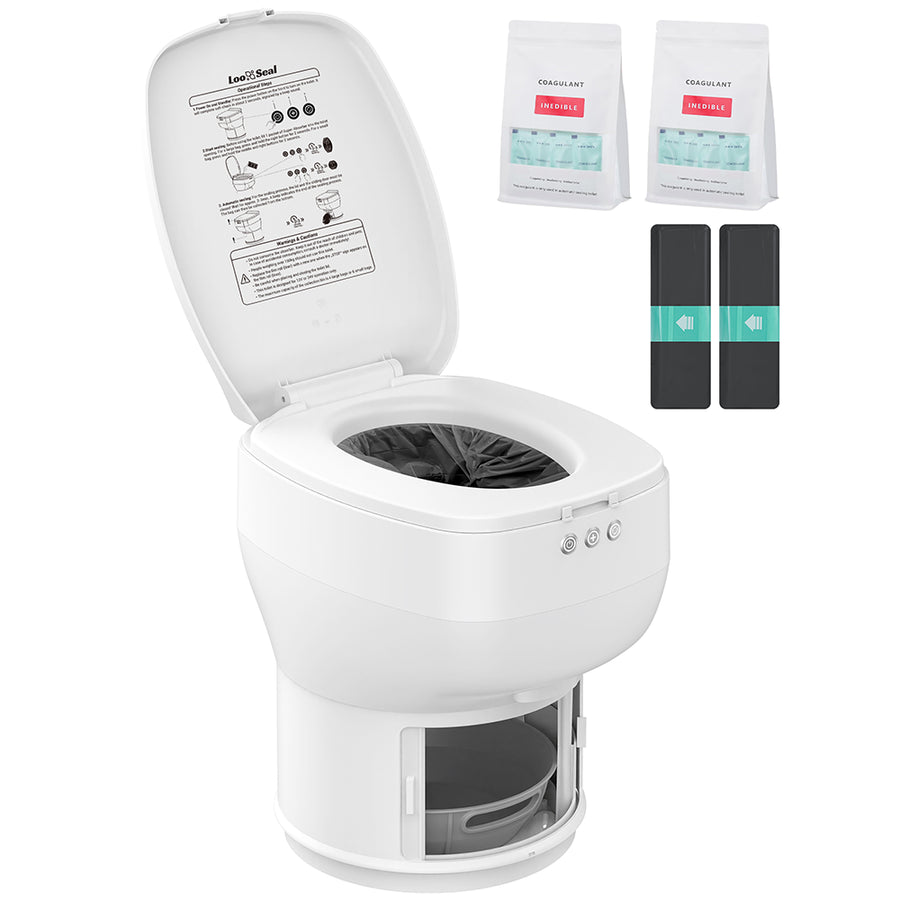
4. Dry Flush / Self-Sealing RV Toilets
What it is: An advanced system that uses automated mechanical parts to individually seal waste after each use, eliminating the need for water or chemicals. Popular examples include the Laveo Dry Flush and the Modiwell automatic sealing system.
Featured Solution: The Modiwell dry flush toilet represents the cutting edge of this category. It uses a high-efficiency sealing system to help users bypass traditional water-flushing or chemical treatments, providing a superior experience in terms of cleanliness and odor control.
How it Works
- Waterless operation.
- Mechanical encapsulation/sealing after every use.
- Relies on specialized proprietary liners/consumables.
Best For:
- Users who prioritize cleanliness and absolute odor control.
- People who want to minimize any contact with raw waste.
Not Suitable For:
- Remote travel where replenishing consumables is difficult.
- Users who do not want to deal with the ongoing cost of refills.
These systems are optimized for ultimate convenience and hygiene.
RV Toilet Type Comparison Chart
| Type | Water Usage | Maintenance | Odor Control | Long-term Cost | Best Scenario |
|---|---|---|---|---|---|
| Chemical | Moderate | High | Moderate | Chemicals + seal maintenance + infrastructure dependency | Traditional RVing |
| Composting | None | Moderate | Moderate | Organic media + ventilation maintenance + operation labor | Off-grid Living |
| Cassette | Moderate | Moderate | Moderate | Chemicals + manual handling of removable tank | Compact RVs |
| Dry Flush | None | Very Low | High | Proprietary consumables (liners/cartridges) | Convenience Seekers |
How to Choose the Right RV Toilet Type
Instead of asking "Which RV toilet is best?", consider these questions first:
How often do you travel?
Occasional travel allows for more maintenance, but full-time use does not.
- Do you have easy access to dump stations?
If not, chemical toilets will quickly lose their appeal.
- How much maintenance are you willing to tolerate?
Less water usage usually means more manual management.
- What is your tolerance for odors and cleanliness?
This factor often eliminates half the options immediately.
The right choice is one that matches your real-world conditions, not your ideal situation.
Summary
Choosing the wrong RV toilet won't cause immediate problems, but it will slowly torment you when you're trying to relax. The purpose of this article isn't to tell you what to buy,
but to help you avoid future regrets.
Related articles:
Rv Toilets: Everything You Want to Know


