


What is a Motorhome Toilet?
A motorhome toilet is a permanently fixed structural component, directly connected to the vehicle's sewage system through an opening in the floor. Unlike portable or flexible RV toilets, it is incorporated into the overall vehicle layout during the design phase. This means:
- The sewage outlet position is fixed.
- The base footprint is fixed.
- The floor is reinforced and sealed only in the designated location.
Any replacement solution that deviates from these prerequisites will increase installation risks.
Common Motorhome Toilet Layout Types

Most motorhome toilets typically fall into one of the following three layouts:
- Rear Layout: The toilet is near the rear wall, with limited space behind the bowl, leaving almost no room for adjustment of the sewage connection.
- Corner Layout: Often used to save aisle space, but requires extremely precise base alignment and size matching.
- Side Wall Layout: More common in longer vehicles, offering greater convenience, but the base position is also structurally fixed.
Regardless of the type, motorhome toilets are always designed around the layout, not around "which toilet to choose."
Why Most Motorhome Toilets Cannot Be Easily Replaced
Many failed replacement cases essentially point to the same problem: Structural incompatibility. There are three main reasons:
- The sewage outlet must be precisely aligned. Even slight deviations can cause chronic leaks.
- The base only has structural support in a specific area. Replacing with a different base size may lead to long-term instability.
- The floor opening cannot be arbitrarily modified. Modifying the opening will damage the sealing layer, making it almost impossible to completely solve water leakage problems later.
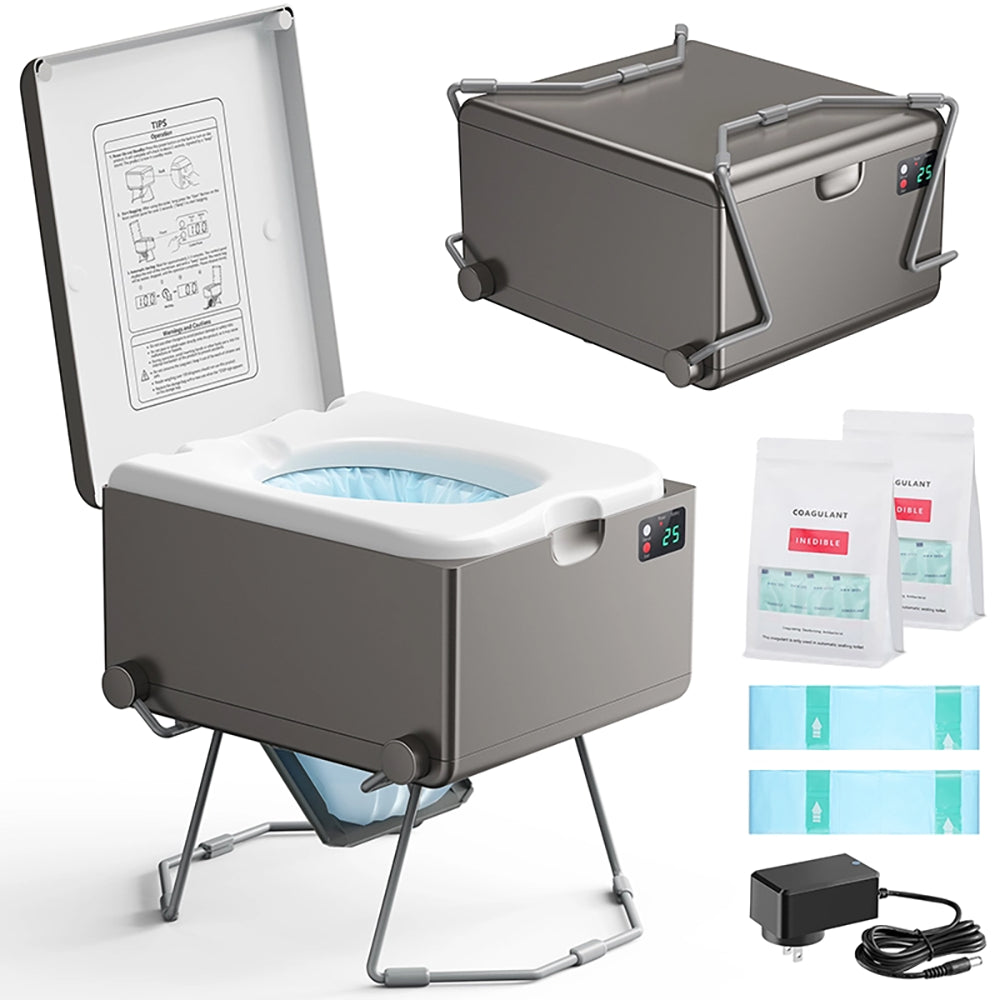
Because of these limitations, a motorhome toilet is not simply a matter of "replacing it with a smaller one." A more reliable approach is to rethink the toilet's operation from a holistic structural perspective, without changing the base position or reconnecting to the sewage system.
For example, some RV toilets are now adopting a dry-flush design that requires no water source or black water tank. This system handles flushing and containment by sealing waste rather than traditional discharge, fundamentally bypassing the spatial and installation limitations imposed by the sewage structure.
Parts of a Motorhome Toilet That Can Be Safely Adjusted
The following adjustments are generally safe without touching the floor structure:
- Bowl height: Adjusting the height for improved comfort while maintaining the base position.
- Seat design: Changing the contact experience without affecting the installation structure.
- Internal seals and components: Used to address minor odors or aging seals.
In addition, there is a category of solutions that reduce reliance on water and sewage pipes at the system level. With a fixed motorhome layout, using an independently operating toilet system that doesn't rely on a black water tank can significantly reduce installation complexity and future maintenance burdens.
These Modifications Should Not Be Attempted
If you don't want to face repeated leaks or floor damage, the following modifications should be avoided:
- Moving or shifting the base position
- Using sewage adapters or offset fittings
- Enlarging or reshaping the floor opening
If water leaks from the bottom of the toilet, the problem is usually not with the "quality of the toilet," but rather that the structure has been compromised.
When is Replacing a Motorhome Toilet a Reasonable Option?
Replacing a motorhome toilet is only a rational choice if the following conditions are met:
- The new solution does not change the original base and sewage alignment.
- It does not require remodeling the floor or water lines.
- The change is in the method of use, not the structural foundation.
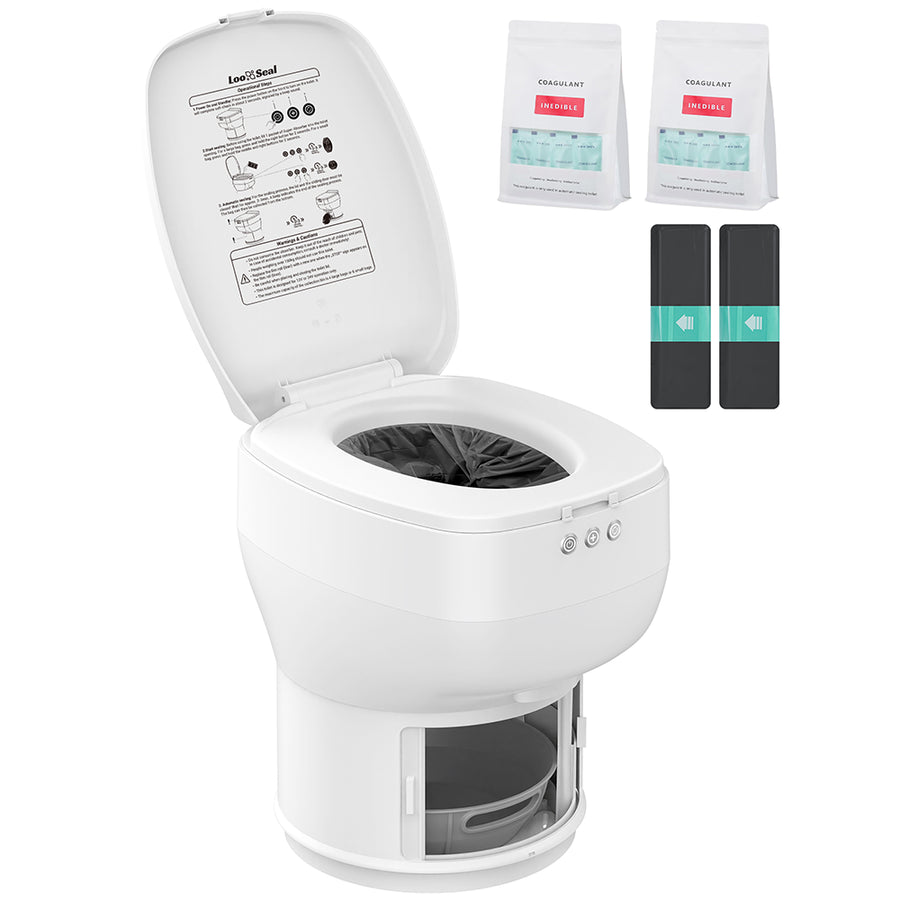
When a toilet is designed to solve odor, maintenance, and space issues without relying on a water supply or connecting to a black water tank, it is essentially designed for the motorhome scenario.
This is why, in recent years, waterless dry flush RV toilet solutions have begun to be seen by more and more motorhome users as a more reliable alternative—
They handle waste by containment rather than discharge, thus avoiding the most common risks associated with traditional toilet systems from a design perspective.
The Essential Differences Between Motorhome Toilets and Other RV Toilets
- Motorhome toilets: Fixed structure, heavily dependent on the layout
- Van toilets: Emphasize flexibility and minimal footprint
- Travel trailer toilets: Generally offer more freedom in terms of location and installation
Confusing different scenarios is the root cause of many failed replacements.
Making a More Reliable Choice for Your Motorhome Layout
When choosing a toilet for your motorhome, what truly matters is not "more features," but whether it respects the existing structural limitations. When space, water supply, and sewage systems are limited, solutions that reduce reliance on these systems from the design stage are often more reliable than complex modifications.
For many motorhome users, this is precisely why waterless, self-contained toilet solutions are gaining attention – not because they are more "advanced," but because they better align with the actual structural logic of motorhomes.


